What wonderful weather we’ve had so far this summer!
It’s been a blessing after last year when the weather conditions had a huge negative impact on the grass growth.
As always we never cut our grass for hay before July, often waiting on some fields till August. This is so the flowers have time for the seeds to set, which encourages biodiversity for the following year.
This last week (and ones to come) we have been very busy making our hay. This starts with cutting the grass. Once it has dried a bit, the grass is then tedded out, which is the turning and spreading of the cut grass so that its moisture can dry out and it becomes hay. Once the grass is hay, it is raked into rows so that it can then be baled.
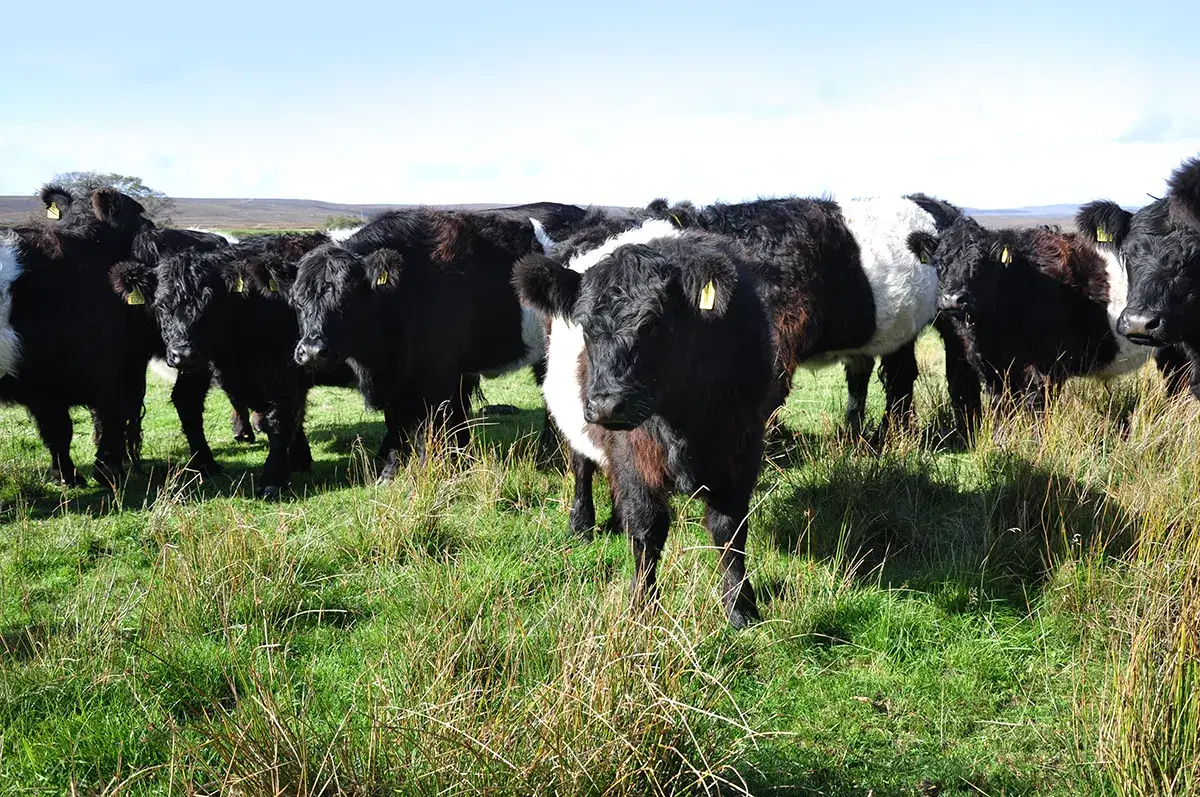
In an ideal perfect summer, when the weather is on our side and we achieve hay, it can be baled in to small manageable conventional bales. As we move our cattle daily, it is not practical for us to have large round bales that are favoured by many farmers. One large round bale is way too much daily feed and the majority would be wasted. With conventional bales it is much easier to load up the vehicle with as many as needed and take it to the relevant field where the livestock are. Spreading it on the ground for them to eat is a fantastic way of spreading the set grass and flower seeds around the pastures. Using conventional bales also has the added benefit of us being able to quickly tell how much we are feeding them. This year has been one of the most perfect years for hay, although at the time of writing, we still have eight acres left to cut.
If we are hampered by rain and don’t have the sufficient window of good weather to make hay, we make haylage instead. Haylage has a slightly higher moisture content than hay and doesn’t need as long before it can be baled. Unfortunately, due to the higher water content, the bales need wrapping in plastic so that it doesn’t go moldy. The amount of plastic that we can go through is far from ideal and not only does it have an environmental impact, it comes with increased costs to us.
But, like I said earlier, this year has been great so far and we have got some lovely hay. As you can see from the video, the hay is picked up by the baler and it is compacted in to bales. As the bales come out of the baler, they drop into a flat eight sledge that is being towed behind the baler. The sledge puts the bales in to two rows of four, it then releases the group of eight bales in the field.
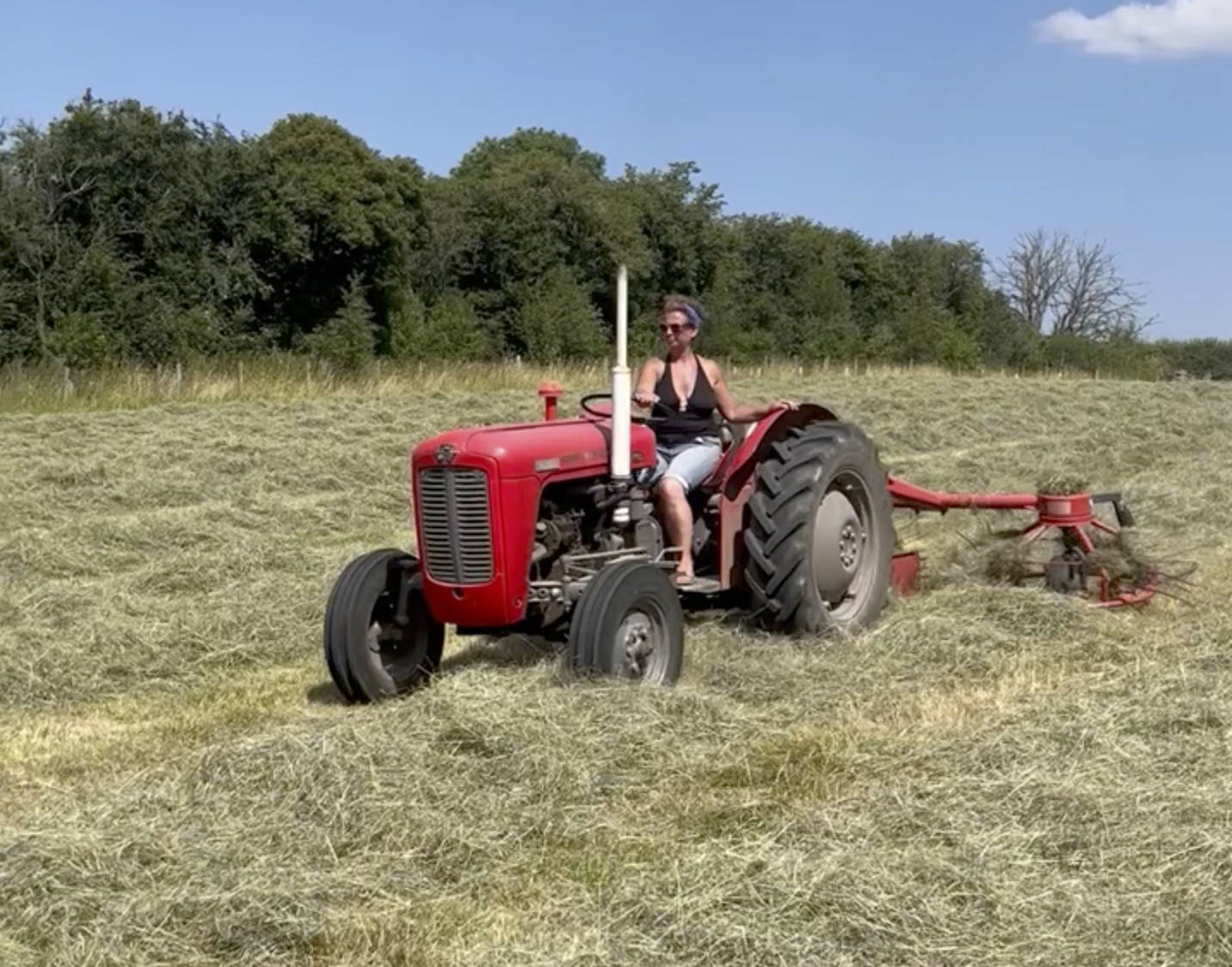
I then go around the field on my tractor (Madge) with a flat eight grab on the front loader. These are then stacked seven high in to stacks of 56 bales. I then pick up the stack of 56 with a bale carrier and lead them to the barn for storage. If we have to travel on the road, it is easier to load the bales with the grab direct on to a flat-bed trailer. Once the trailer is full and the bales have been secured with straps we can transport them to the farm and store in the barns ready for winter. Getting the bales stacked in to the barns seems to be the hardest part, as we have to handball each bale in to position.
However, when winter comes, all the tears, (yes I often cry at this time of year due to all the stress and external factors that can hinder us, often overwhelms me I’m working on this) sweat and hard work really pays off. There is nothing more satisfying than when you are in the depths of winter and you go in to the barn to get the hay, it’s beautiful smell, its crunchiness and the sheer delight of the cattle enjoying it makes my heart swell and I can think “we made that”.
There’s no better sound than listening to your cattle munching on the summers hay with grunts and sighs of appreciation.